In the autumn wind, the plantain fades – whispering the impermanence of all things
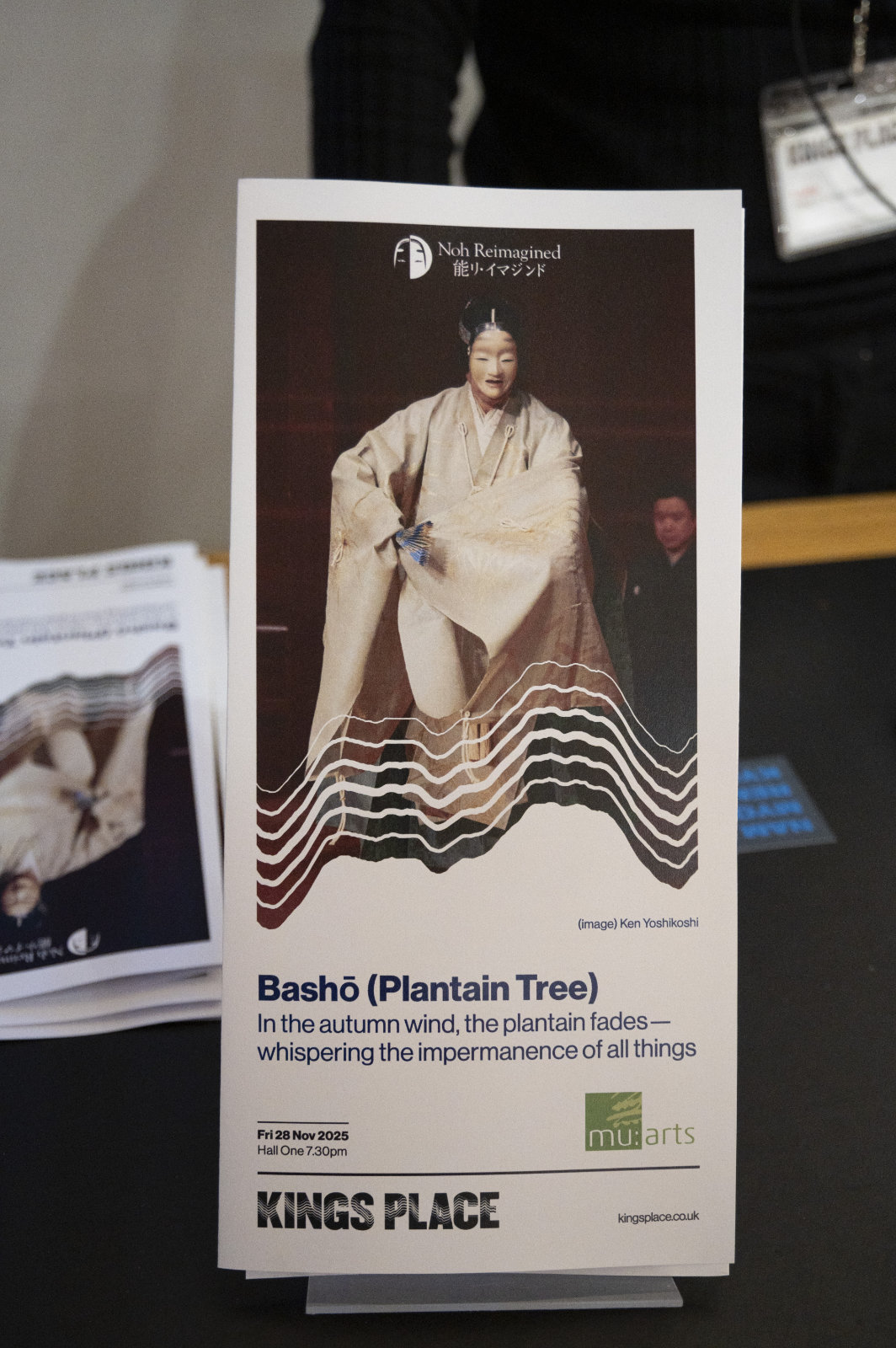
‘Bashō’ (Plantain Tree) by Konparu Zenchiku (1405-1470), is a mesmerising tale in which the spirit of a banana plant, appearing as a middle-aged woman, embodies the Lotus Sutra’s teaching that plants too, can attain enlightenment, reflecting a vision of the harmony and equality of humans and the natural world. ‘Bashō, was performed for the first time outside Japan in history as part of Noh Reimagined 2025.
In the mountains of ancient China, a monk lives quietly in a small hut. Lately, he has felt the strange presence of someone nearby. One day, a woman appears. She says she has come to form a spiritual connection and follows the teaching of the Lotus Sutra, which says that even plants and trees can reach enlightenment. The monk tells her that the beauty of flowers is a form of the Buddha’s truth. The woman is happy to hear this and hints that she is not human before disappearing.
Later that night, she returns. This time, she reveals that she is the spirit of a plantain leaf.
She says she is thankful to be touched by the Buddha’s compassion, and that all things – soil, plants, and people – are true just as they are. Unlike flowers that bloom brightly in spring and autumn, she has lived a quiet life in the shadows. Under the moonlight, lost in thought, she begins to dance slowly. As the wind blows through the garden, the flowers fade away, and only a torn plantain leaf remains.
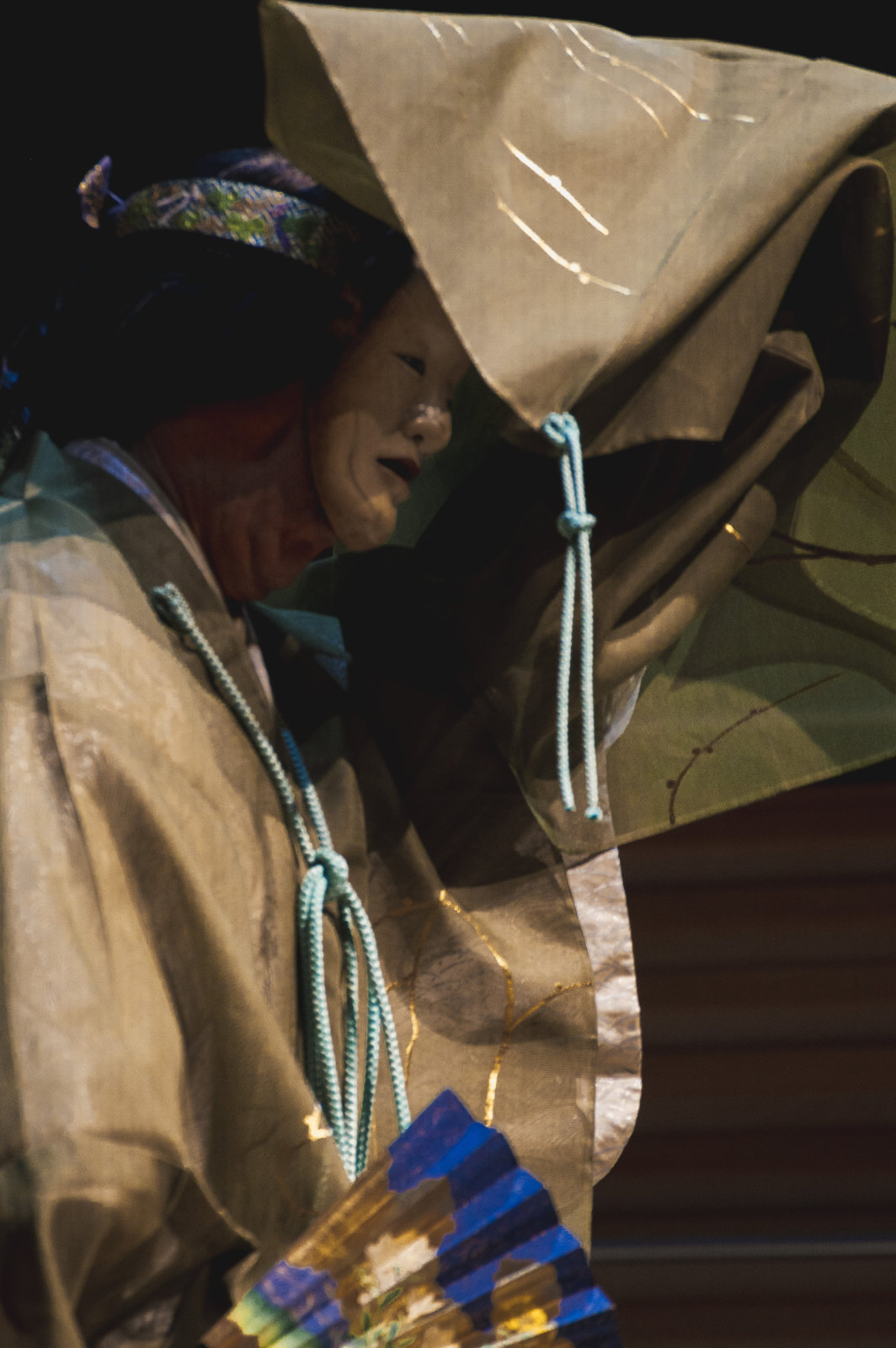
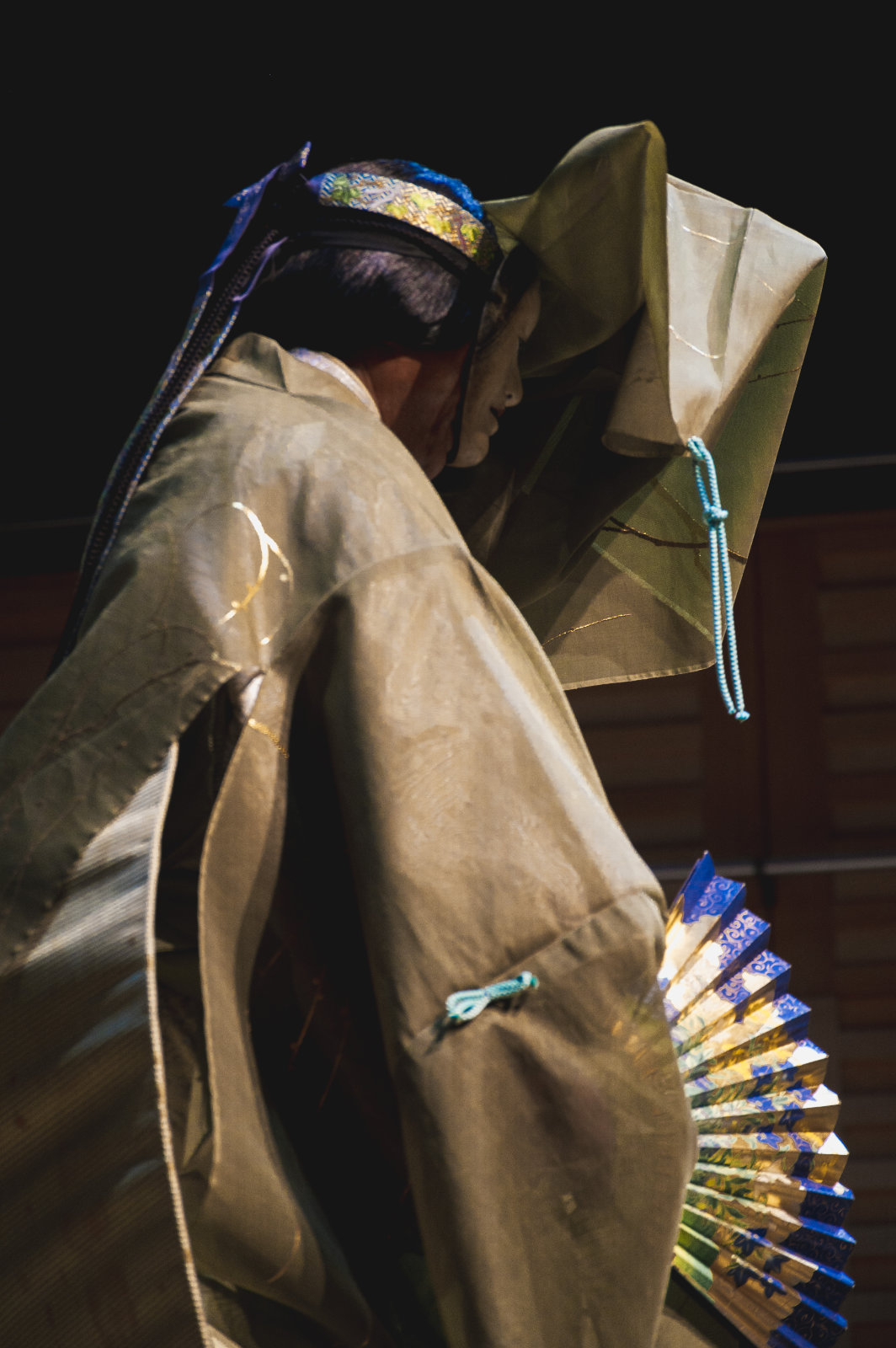
This performance includes a reimagined English interlude by a British storyteller Laura Sampson, based on the original ai-kyogen interlude. She weaves together two enigmatic classical tales: ‘The Plantain Tree in Snow’, where the impossible flourishes in winter’s stillness, and ‘The Dream of the Plantain and the Deer’, where memory, illusion, and nature gently blur.
This performance was adapted from the original, featuring the shite (main actor), jiutai (chorus), and ohayashi (musicians), in order to fit within an 80-minute performance.
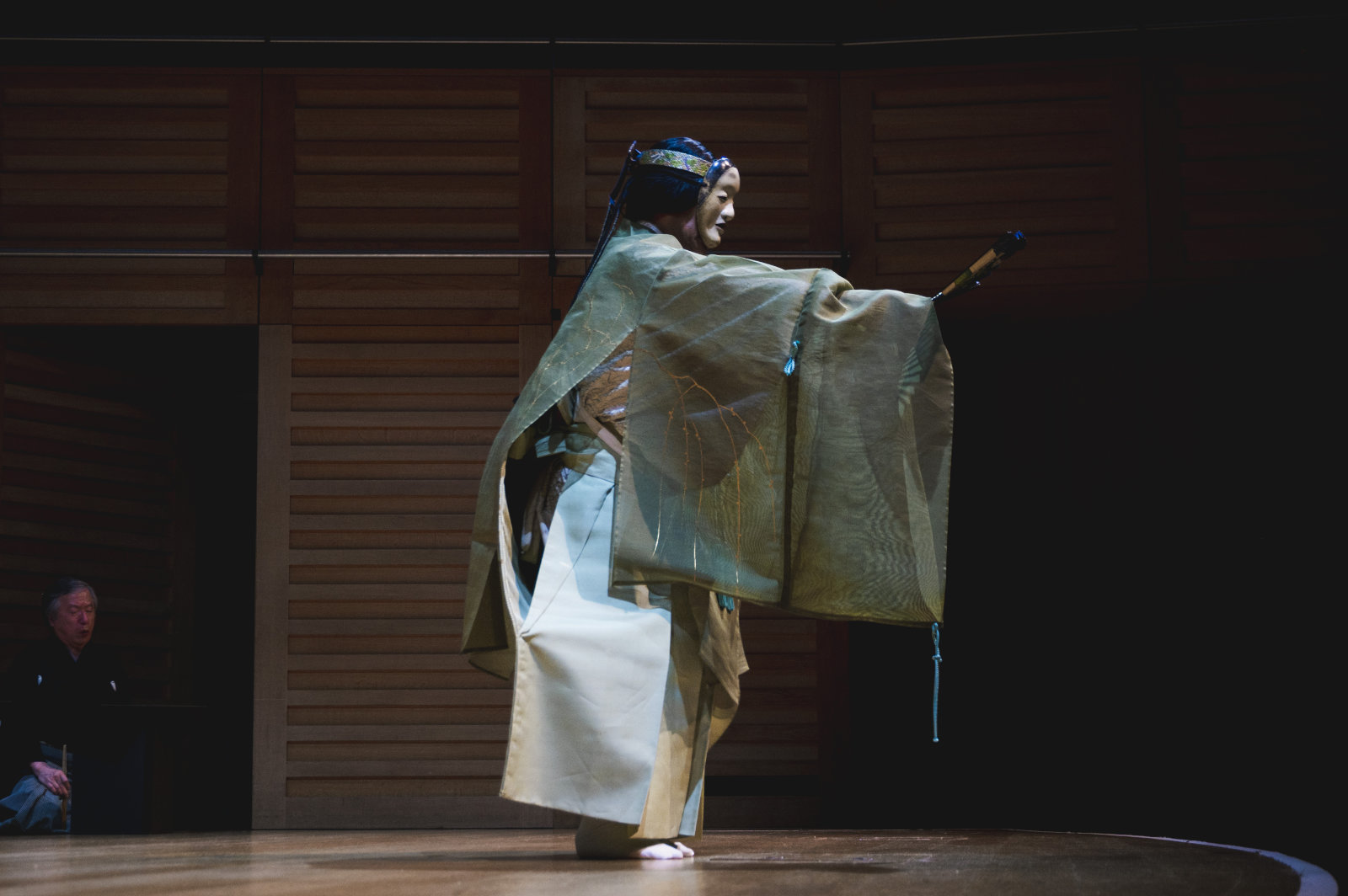
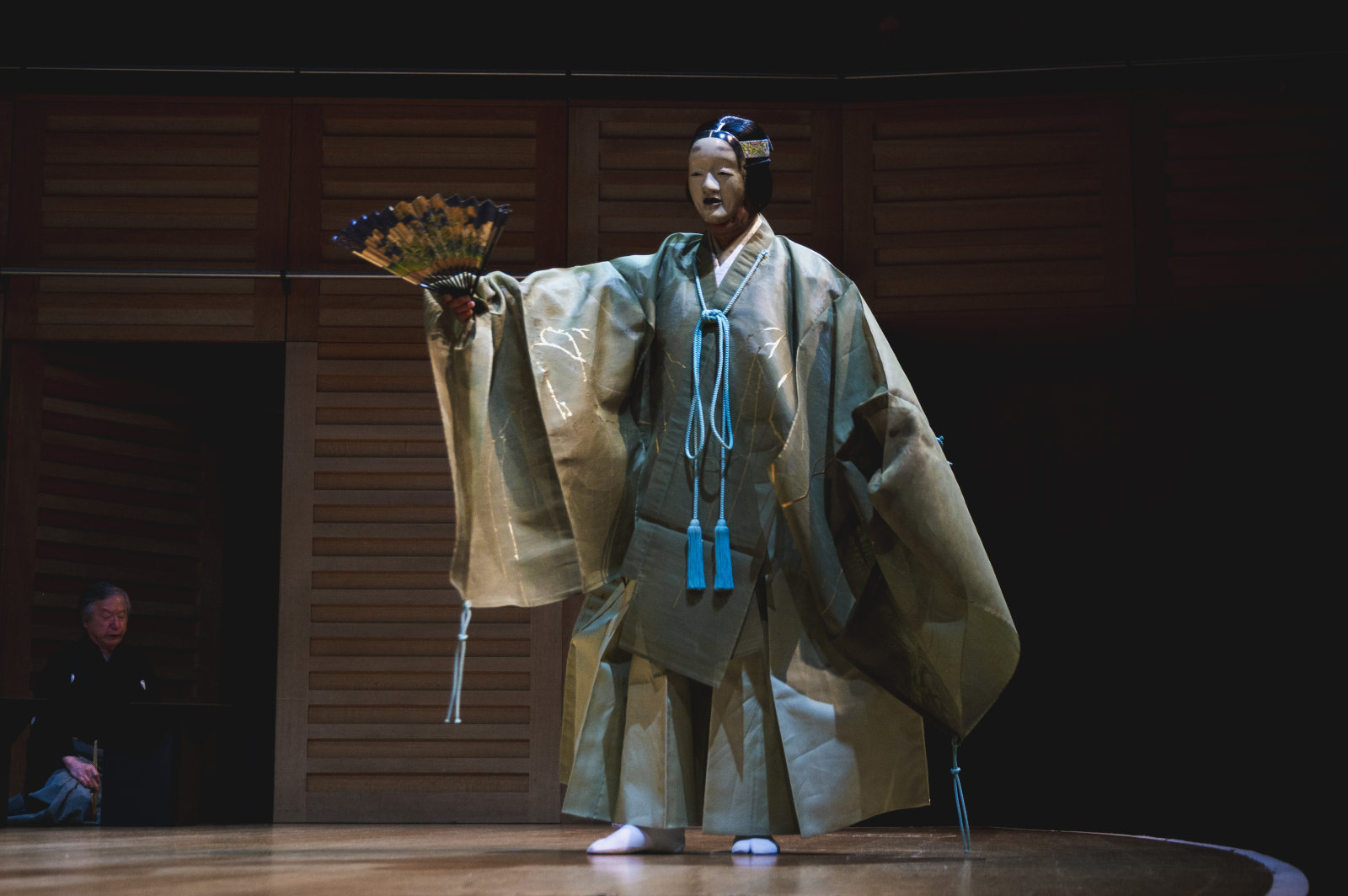
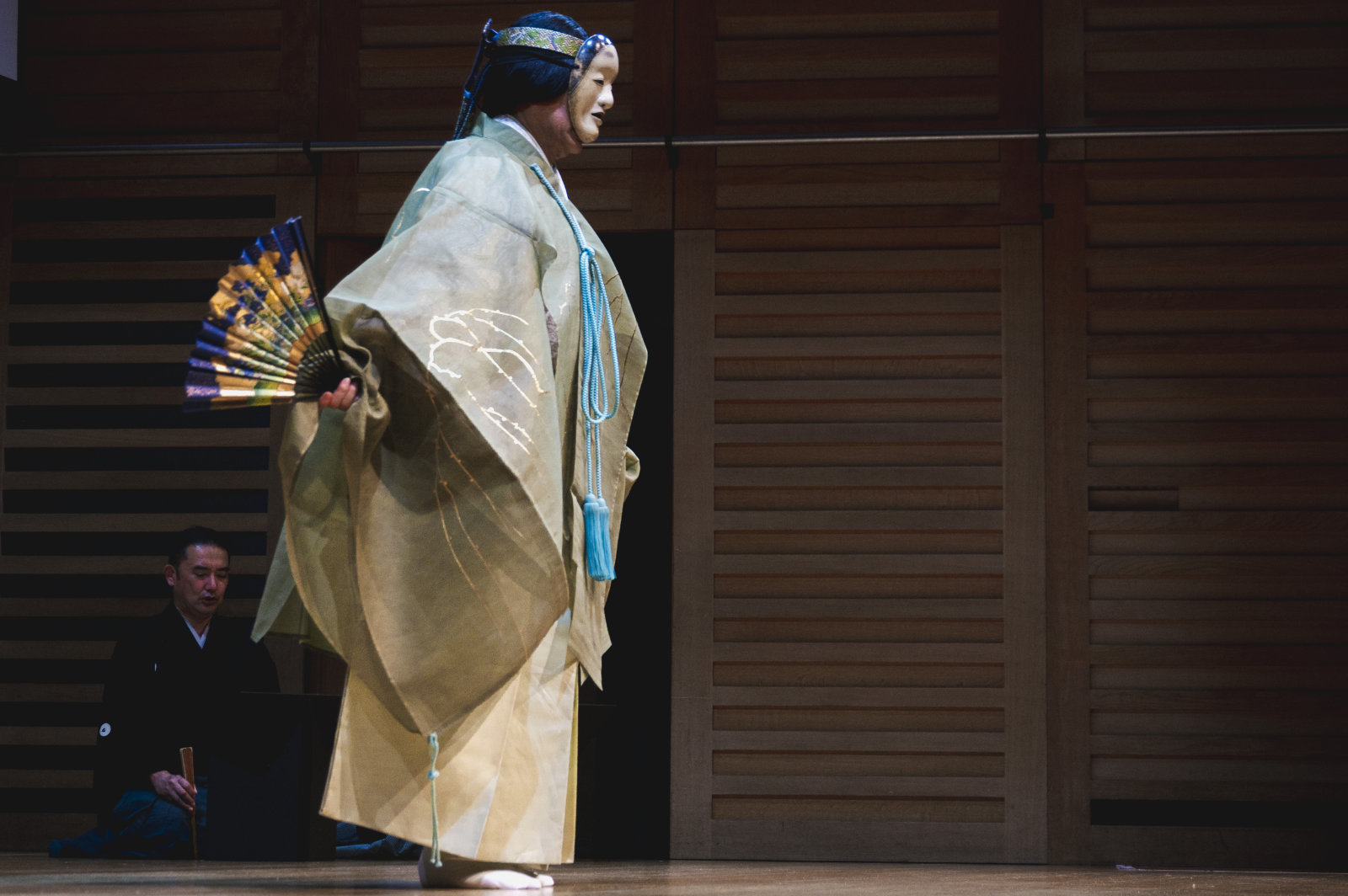
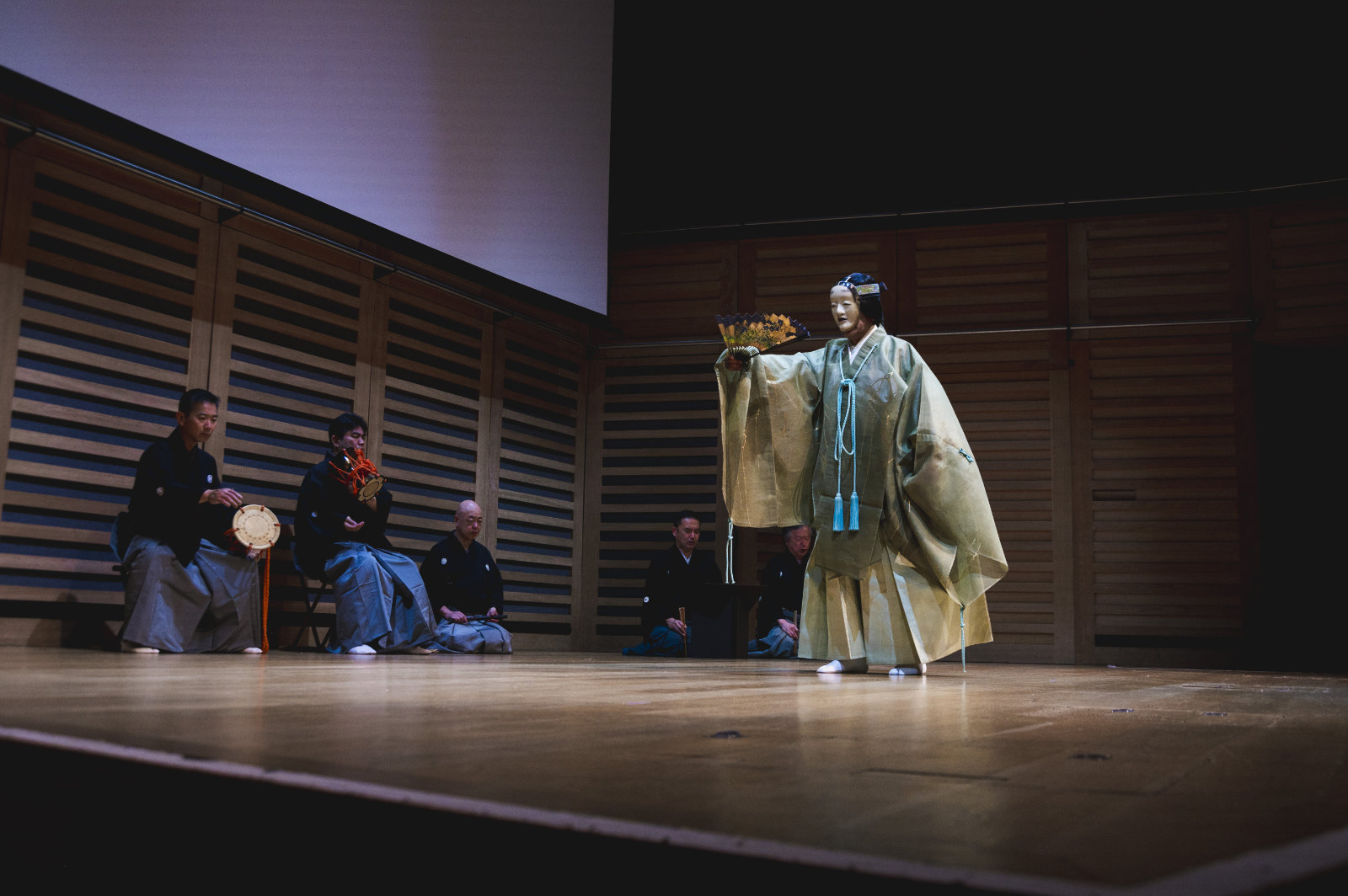
Kanji Shimizu (Kanze School) – Shite
Kanji Shimizu (Kanze School) – Shite
Takao Nishimura (Kanze School) – Jiutai (chorus)
Haruhiko Hasegawa (Kanze School) – Jiutai (chorus)
Satoshi Tsukitaku (Morita School) – Nohkan (Noh flute)
Naoya Toriyama (Kanze School) – Kotsuzumi (small hand drum)
Mitsuhiro Kakihara (Takayasu School) – Otsuzumi (large hand drum)
Laura Sampson – Ai kyogen Interlude Storytelling
About Kanji Shimizu (shite – main actor)
Kanji Shimizu (shite actor, Kanze School) is one of the most sought-after noh actors today.
Born in 1953, he started noh training after graduating Waseda University In 2019, performances of Holly Mother in Nagasaki written by a renowned scientist Tomio Tada and Jacob’s Well written by a renowned Austrian art historian Diethard Leopold, were held in three cities across Europe. Shimizu actively engages in interdisciplinary collaborations, including productions with contemporary theatre and dance, as well as joint performances with other traditional performing arts such as Okinawa’s Kumi Odori and China’s Kunqu. In 2024, he was awarded the prestigious Kanze Hisao Award for his outstanding contributions to the development of noh theatre tradition. Shimizu is designated as an Important Intangible Cultural Property by the Japanese government.
About Laura Sampson
Laura Sampson is a British-Trinidadian storyteller, writer and noh practitioner, based in London, UK. Recent projects include creating work for London’s Victoria & Albert Museums, National Trust, Lyric Hammersmith, Polka Theatre, and performing with leading UK storytelling organisations Crick Crack Club and Story Jam. She is the author of two-story collections, Enchanted Tales (2023) and Mythical Tales (2025), both published by Templar Books. Her unique storytelling style incorporates elements of noh, as in her latest solo show She’ll be Coming Round the Mountain (based on the noh Yamanba) and ongoing collaborations with Irish composer Anna Murray and the Quiet Music Ensemble, which combine Irish myth and noh chant.