Matsukaze by Zeami Motokiyo (1363-c. 1443) is one of the most revered masterpieces of classical noh, and a work that Zeami himself held in special regard. Its haunting themes of ghostly love, memory, and seaside solitude that have inspired artists for centuries, echoing in opera, poetry, and painting in Japan and beyond.
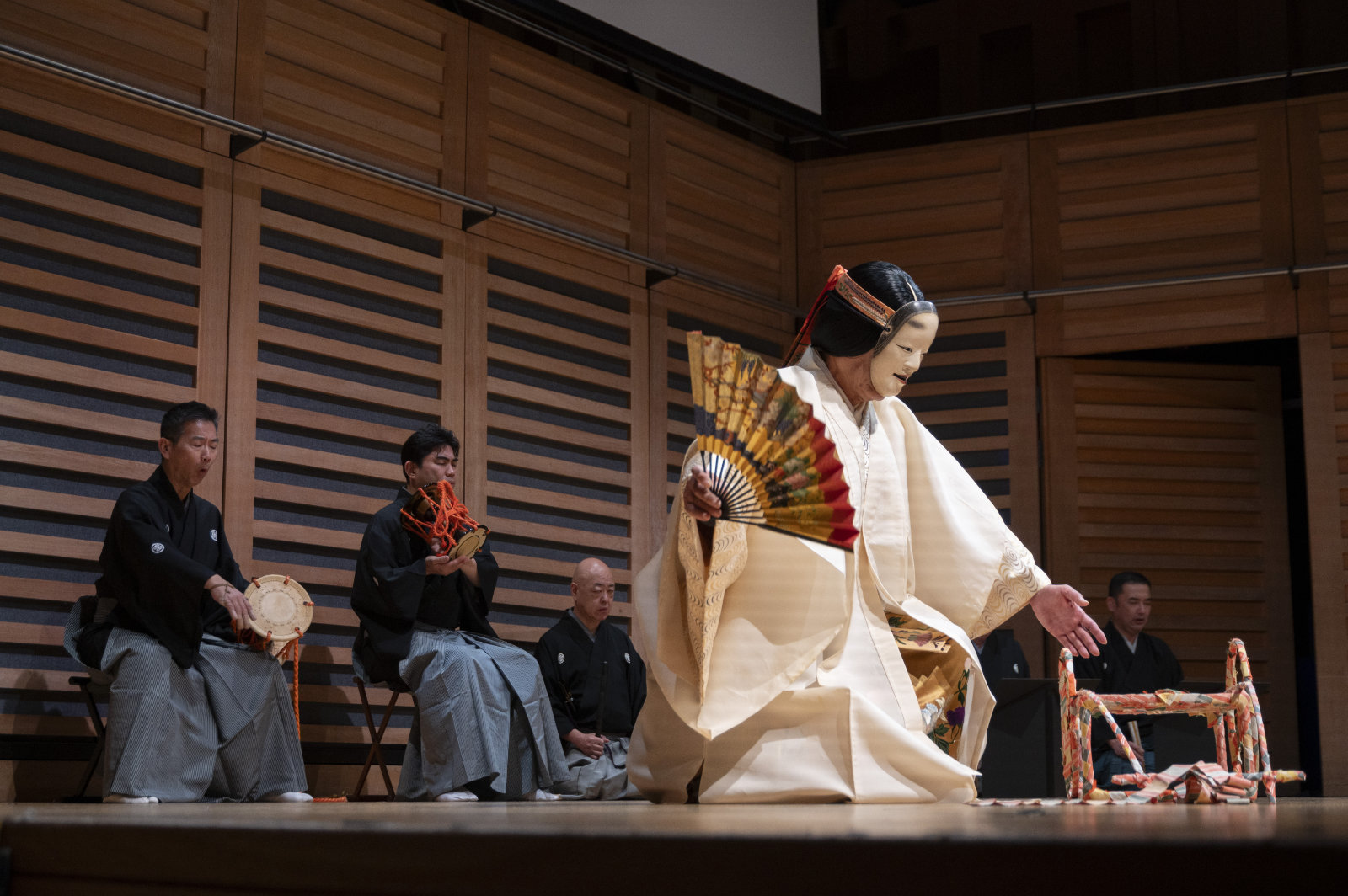
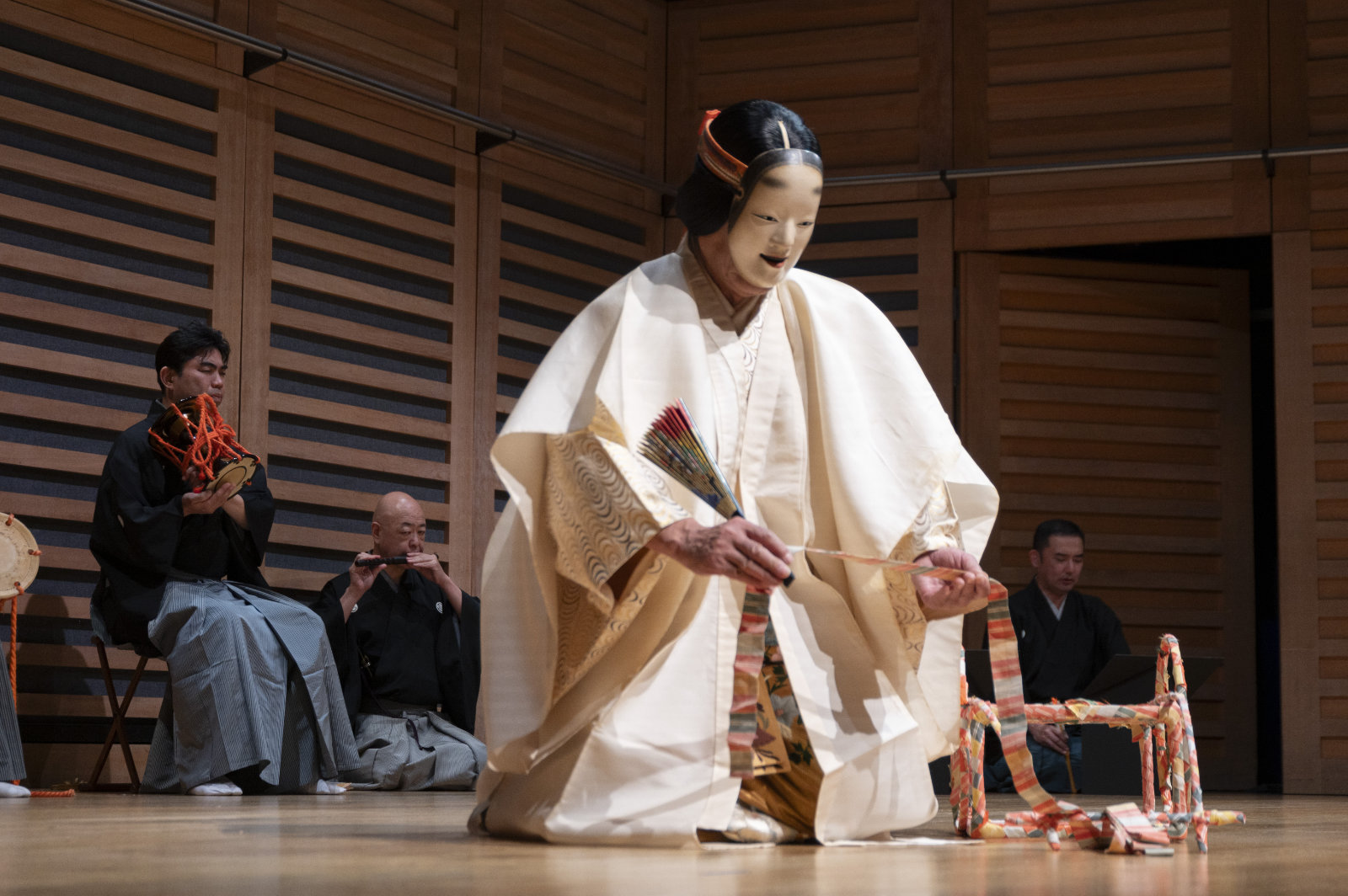
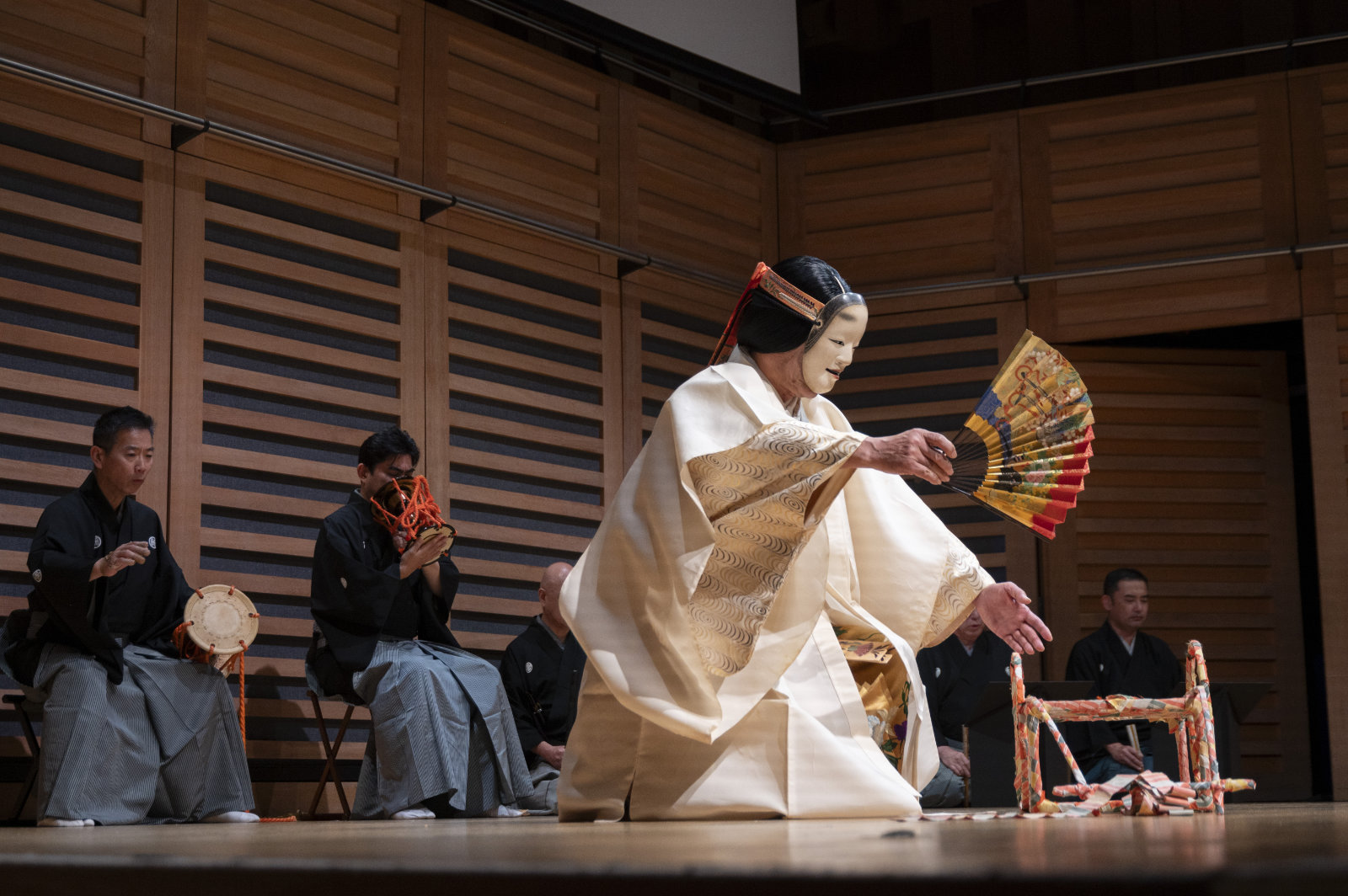
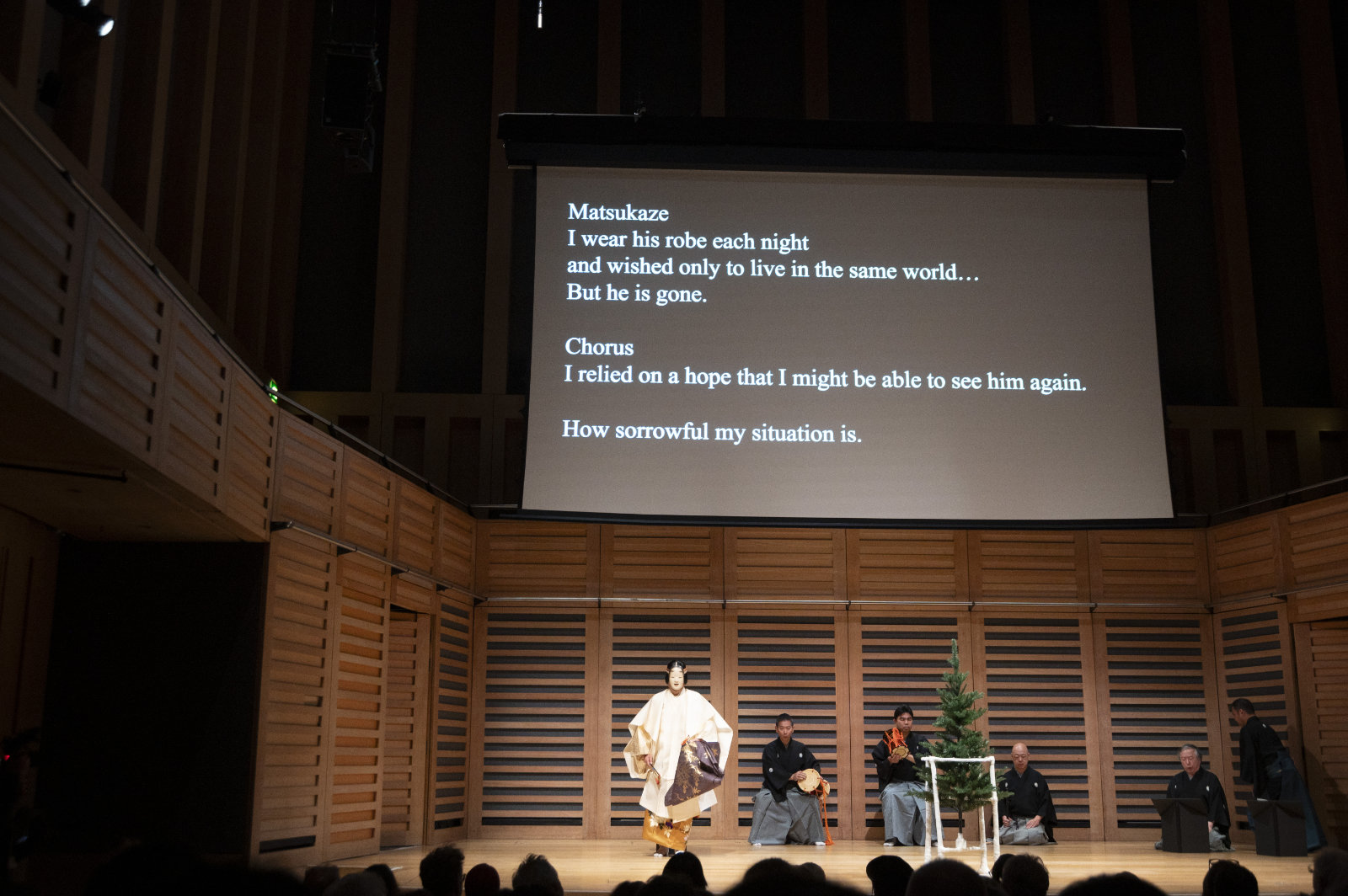
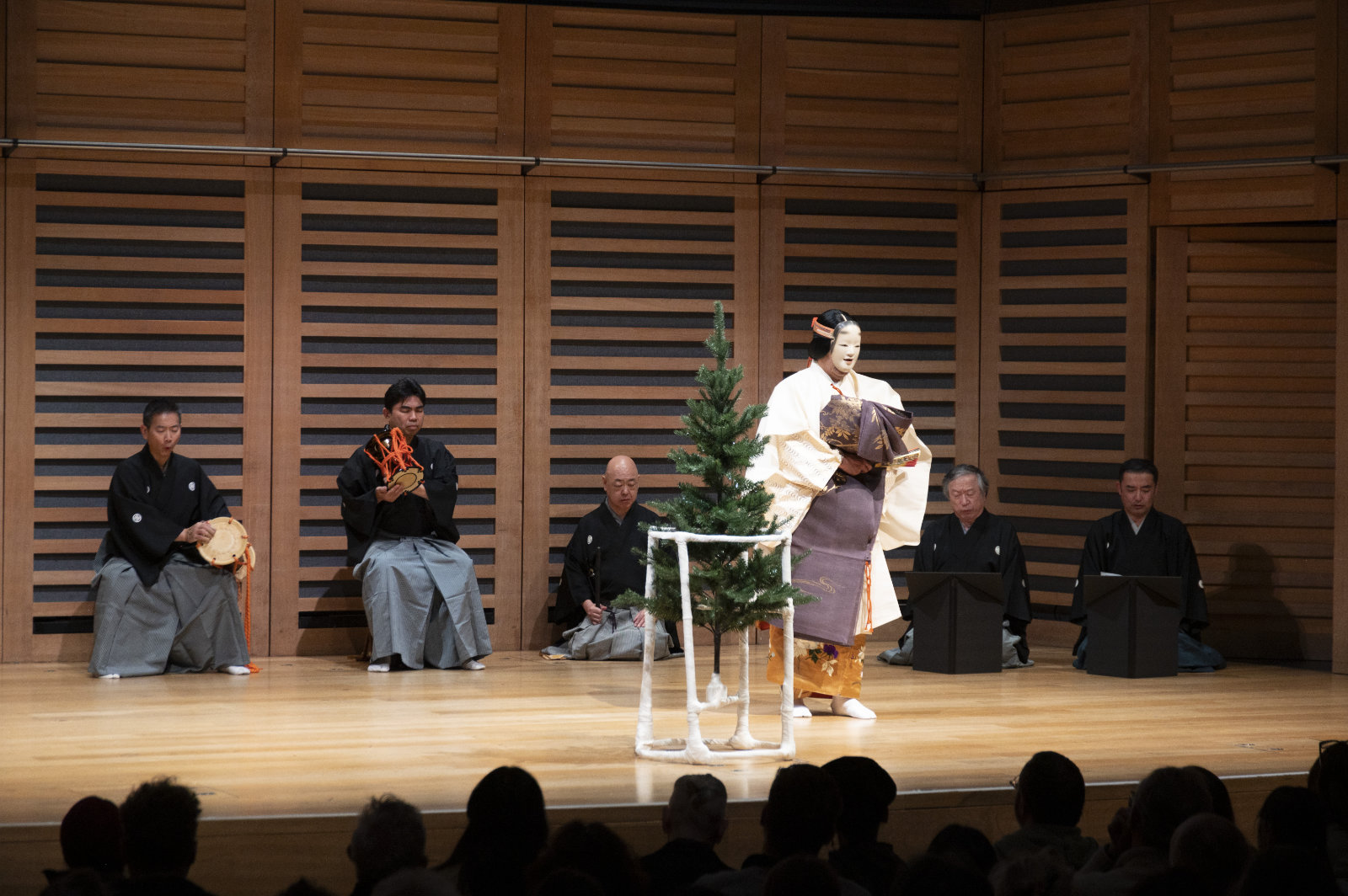
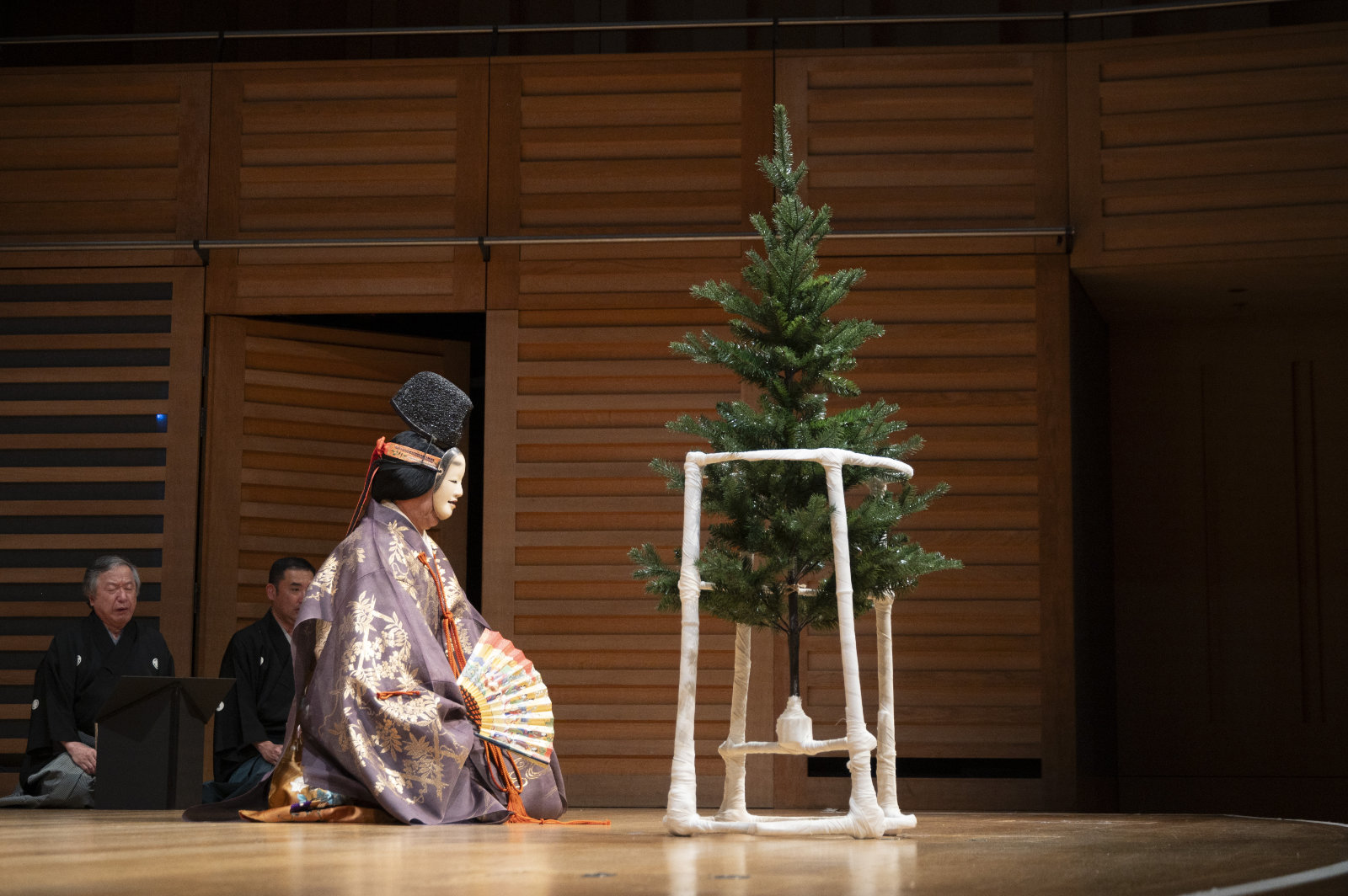
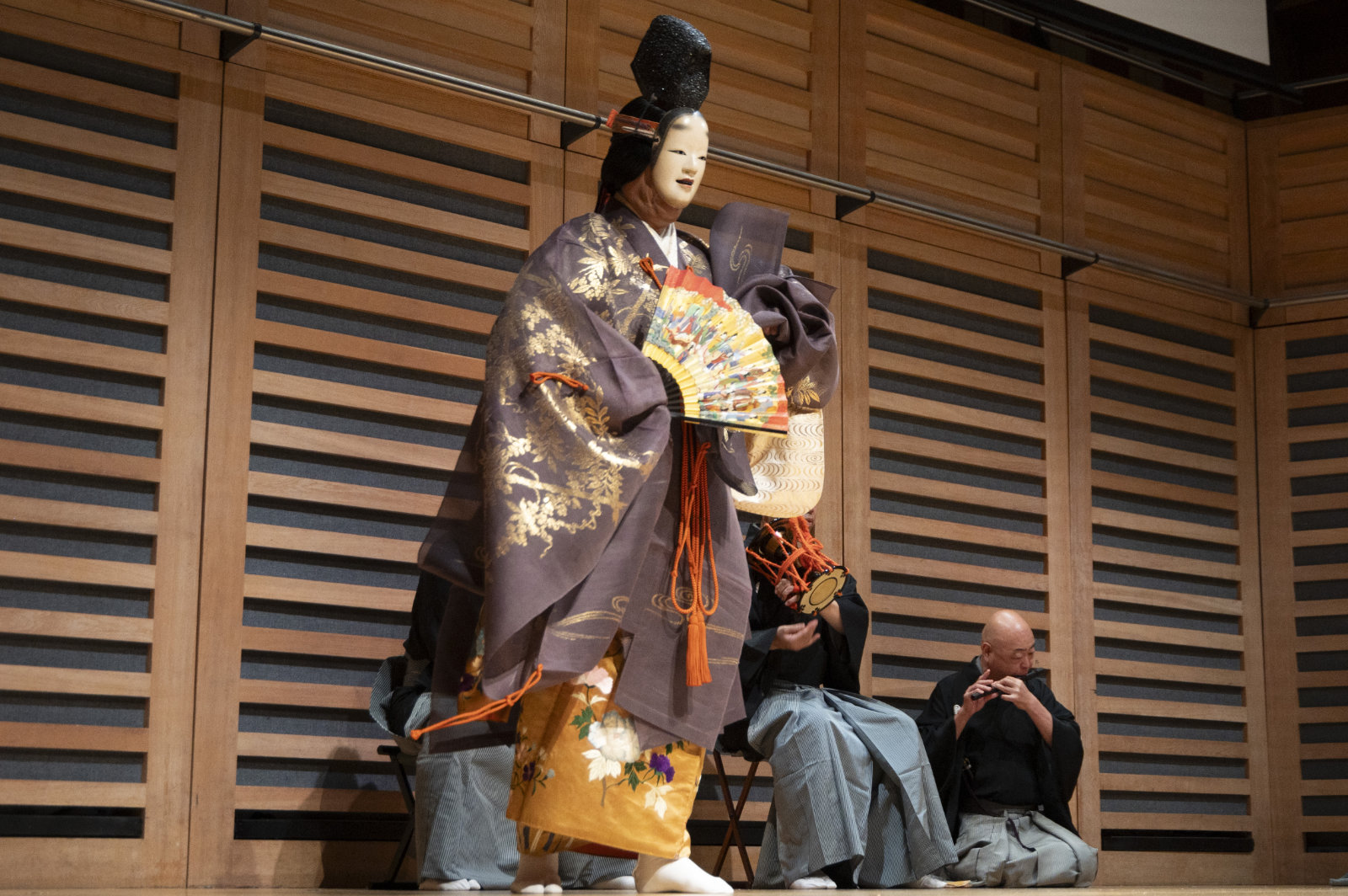
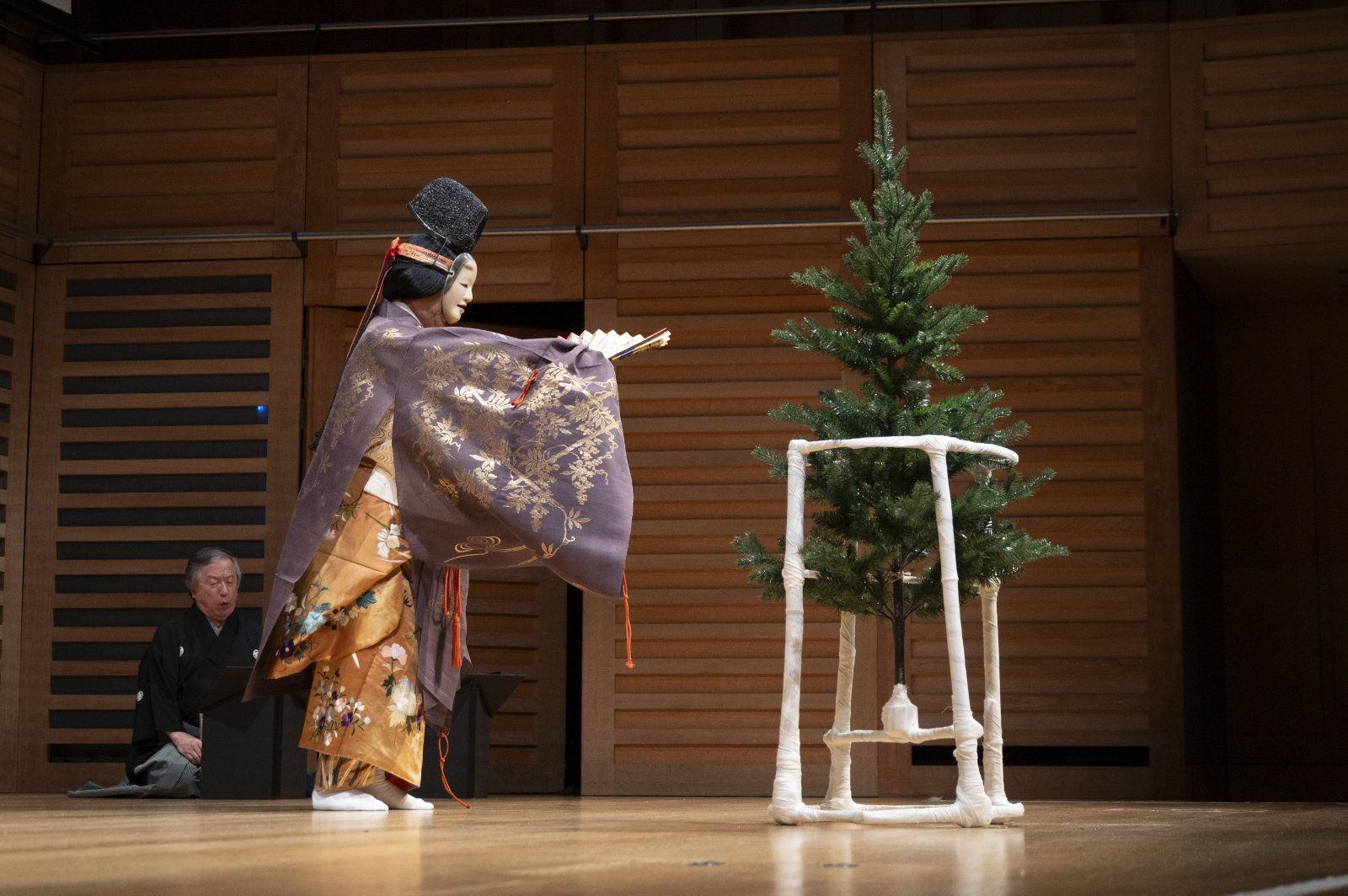
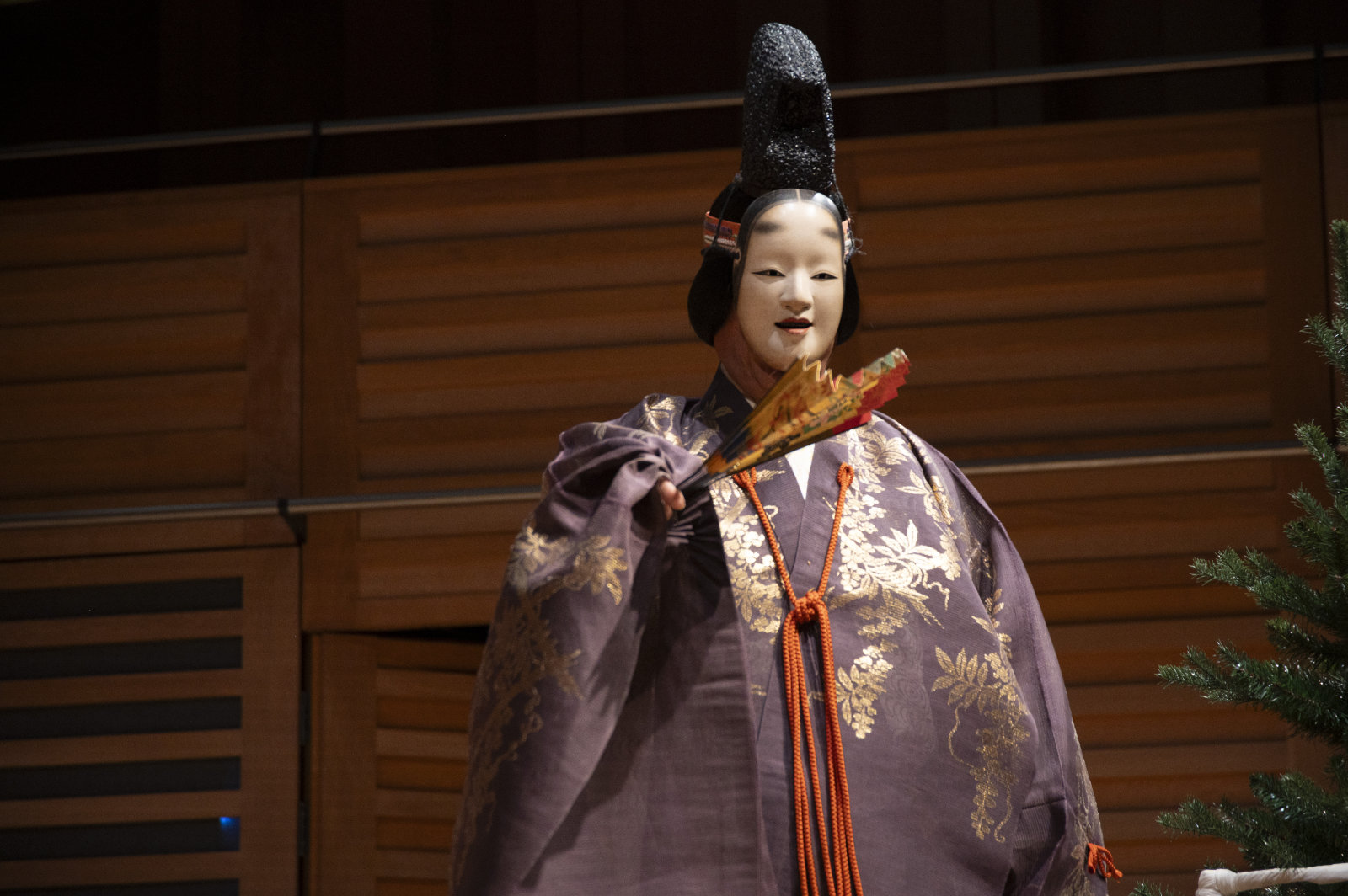
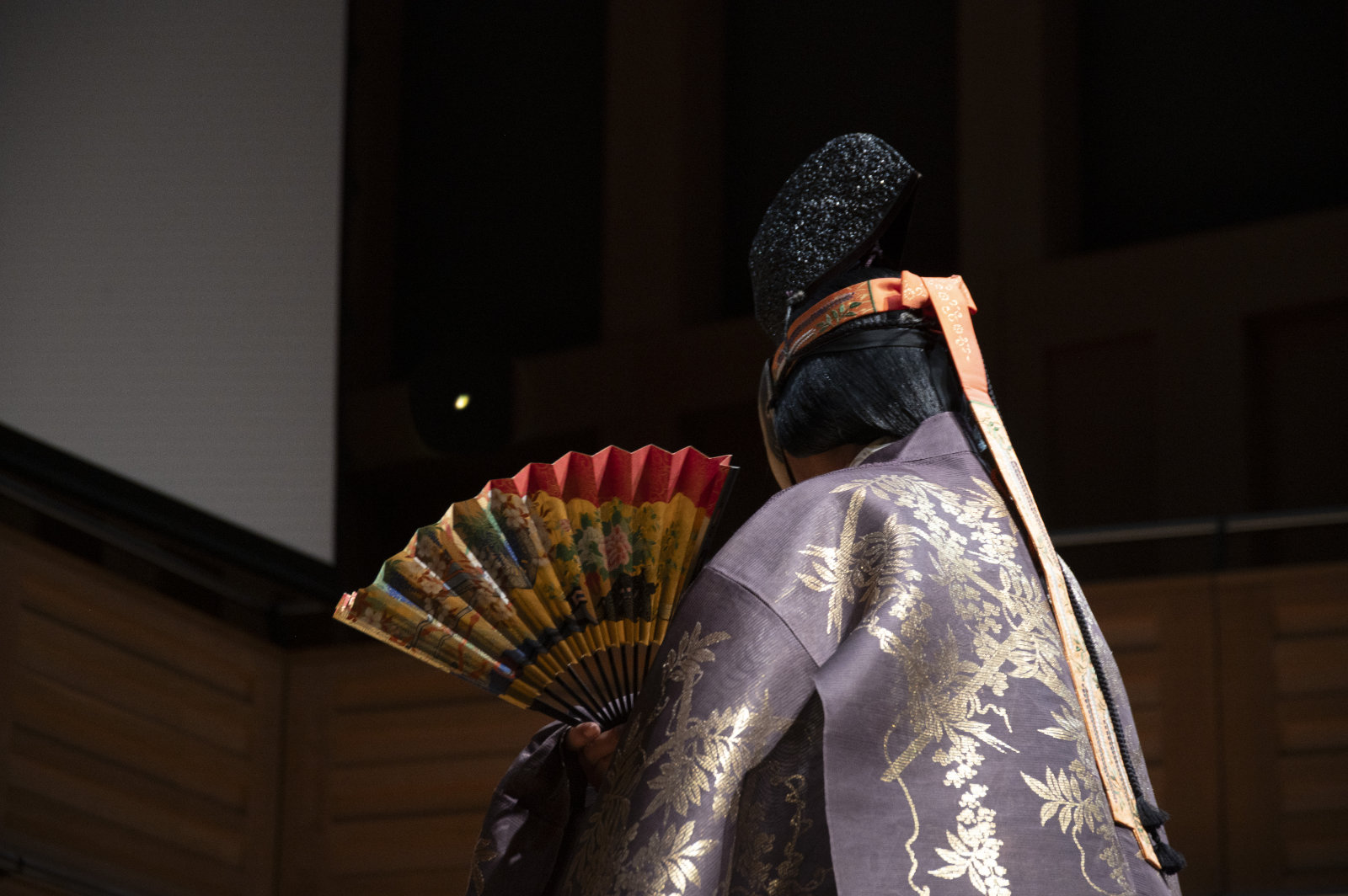
One autumn evening, a travelling monk reaches the shores of Suma (modern-day Kobe) and notices a pine tree said to mark the graves of two sisters, Matsukaze and Murasame, former saltmakers. The monk offers prayers for their souls. That night, two beautiful women return from drawing seawater under the moonlight and offer the monk to stay for one night.
When the monk mentions the poet Ariwara no Yukihira, once exiled there, the women weep – revealing themselves as the sisters’ ghosts, who long ago loved Yukihira.
Overwhelmed with emotion, Matsukaze dons Yukihira’s cloak and cap. Mistaking the pine tree for her beloved, she clings to it and dances in a frenzy of remembrance, until dawn breaks. The sisters vanish like mist, leaving only the sound of wind in the pines.
Noh Reimagined 2025 (Barcelona and London) presented Matsukaze outside Japan for the first time since its staging in Paris in 1969.
Kanji Shimizu (Kanze School) – Shite (main actor)
Takao Nishimura (Kanze School) – Jiutai (chorus)
Haruhiko Hasegawa (Kanze School) – Jiutai (chorus)
Satoshi Tsukitaku (Morita School) – Nohkan (flute)
Naoya Toriyama (Kanze School) – Kotsuzumi (small hand drum)
Mitsuhiro Kakihara (Takayasu School) – Otsuzumi (large hand drum)